Article Summary:
From Dana Milbank: Forest bathing, a practice originating in Japan in the 1980s called shinrin-yoku, is gaining popularity in the United States as a potential health intervention. At Harvard’s Arnold Arboretum, Dr. Susan Abookire leads forest therapy sessions for young doctors, aiming to reduce stress and burnout in the medical profession.
The practice involves immersing oneself in a forest environment, engaging multiple senses, and connecting with nature. Proponents like Dr. Qing Li from Nippon Medical School cite scientific evidence suggesting numerous health benefits, including lower blood pressure, reduced anxiety, improved immune function, and increased natural killer cell activity.
Key elements of forest bathing include inhaling phytoncides (essential tree oils) and terpenes, which are believed to have immune-boosting and potentially anti-tumorigenic properties. While some practitioners, like M. Amos Clifford, incorporate more ritualistic approaches involving imaginative communication with nature, the core practice remains relatively simple: spending time in a forest environment, moving slowly, and mindfully experiencing the surroundings.
Research indicates that forest bathing can provide health benefits even in urban parks, with effects potentially increasing in larger, denser forest areas. Recommendations vary from spending two to four hours in a forest to simply finding a natural space one enjoys.
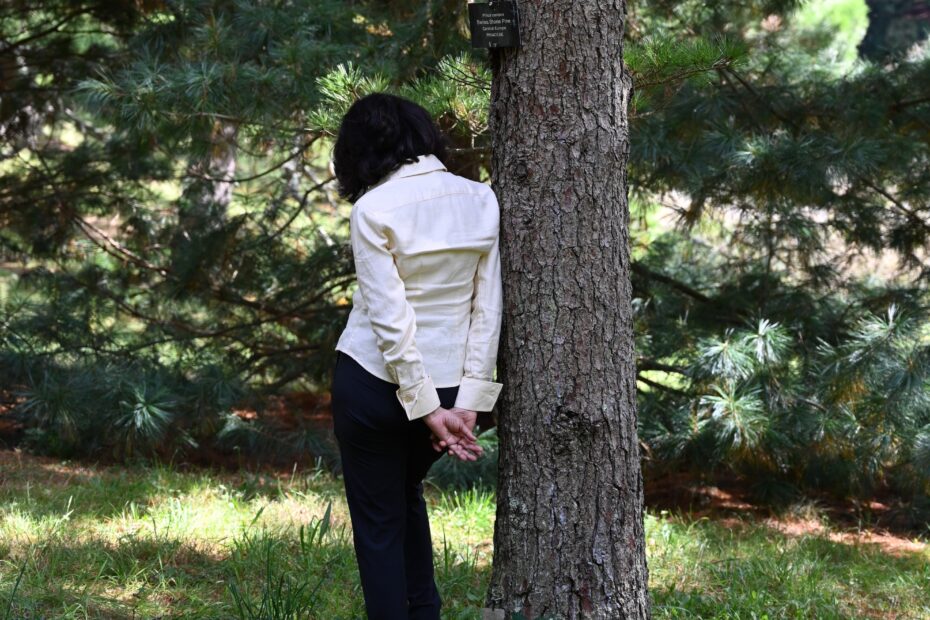
During Abookire’s session with medical residents, participants reported feeling calmer, more grounded, and reconnected with themselves. The practice aims to help individuals slow down, disconnect from technological distractions, and develop a deeper appreciation for nature’s therapeutic potential.