Article Summary:
The story of the Tower of Babel serves as a powerful metaphor for the fragmentation and division that has taken hold in America over the past decade. The advent of social media platforms like Facebook and Twitter, with their emphasis on virality and outrage, has eroded the social capital, strong institutions, and shared stories that previously held diverse democracies together.
The enhanced ability of these platforms to amplify extreme and divisive voices, while silencing more moderate and nuanced views, has fueled political polarization and a breakdown of trust in institutions. Confirmation bias and the punishment of internal dissent have rendered many of America’s key knowledge-producing institutions – universities, media, government – increasingly “stupid” and unable to function effectively.
The author argues that major reforms are needed to harden democratic institutions against these corrosive forces, rein in the negative impacts of social media, and better prepare the next generation for citizenship in this new, post-Babel era. Proposals include nonpartisan electoral reforms, restrictions on social media amplification, and a greater emphasis on free play and unsupervised social interaction for children.
While the current situation seems bleak, the author expresses cautious optimism, noting the resilience of grassroots efforts to bridge divides and the enduring spirit of voluntary civic association that Tocqueville observed in 19th-century America. Navigating the challenges of the post-Babel world will require change at both the institutional and individual level.
Article Excerpt:
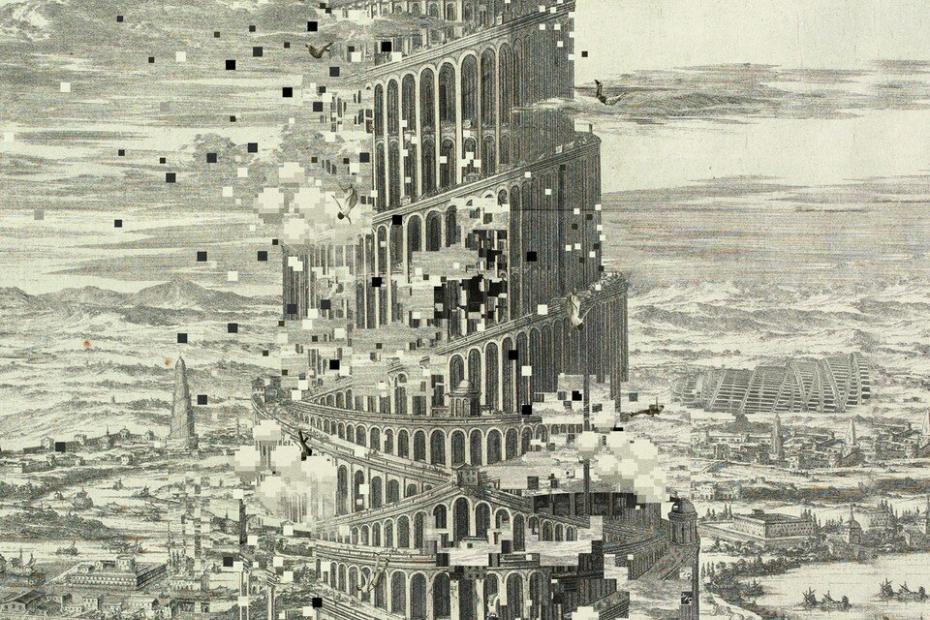
What would it have been like to live in Babel in the days after its destruction? In the Book of Genesis, we are told that the descendants of Noah built a great city in the land of Shinar. They built a tower “with its top in the heavens” to “make a name” for themselves. God was offended by the hubris of humanity and said: “Look, they are one people, and they have all one language; and this is only the beginning of what they will do; nothing that they propose to do will now be impossible for them. Come, let us go down, and confuse their language there, so that they will not understand one another’s speech.”
The text does not say that God destroyed the tower, but in many popular renderings of the story he does, so let’s hold that dramatic image in our minds: people wandering amid the ruins, unable to communicate, condemned to mutual incomprehension.
The story of Babel is the best metaphor I have found for what happened to America in the 2010s, and for the fractured country we now inhabit. Something went terribly wrong, very suddenly. We are disoriented, unable to speak the same language or recognize the same truth. We are cut off from one another and from the past.