
Smart Ass Take:
Look, I have opinions. Confident ones. Delivered with the authority of a man who has clearly Googled nothing. And apparently I’m in excellent company, because the entire species is out here citing Maslow’s pyramid (which Maslow never drew), swearing by Myers-Briggs (which can’t even remember what it said about you five weeks ago), and dying on hills built out of pop trivia we absorbed by osmosis in 2003. Curt Buermeyer’s piece is a nice, gentle whack from the reality stick. A keen reminder that often the loudest person in the meeting wins, regardless of whether they’re right, because we’re all wired to mistake volume for evidence.
Article Excerpt:
Nearly 75% of people who retake the Myers-Briggs within five weeks receive a different personality type. That’s not a minor measurement issue — it’s a fundamental reliability failure. A personality test that gives you a different answer about yourself in five weeks isn’t measuring who you are. It’s measuring your mood that Tuesday morning.
Article Summary:
Curt Buermeyer opens with a card game at Lake Anna where he confidently told his son that seven shuffles fully randomizes a deck. His son pulled up Claude, checked the actual research, and — surprise — Dad was wrong. The seven-shuffle rule is oversimplified pop trivia Curt had been repeating for years without ever checking.
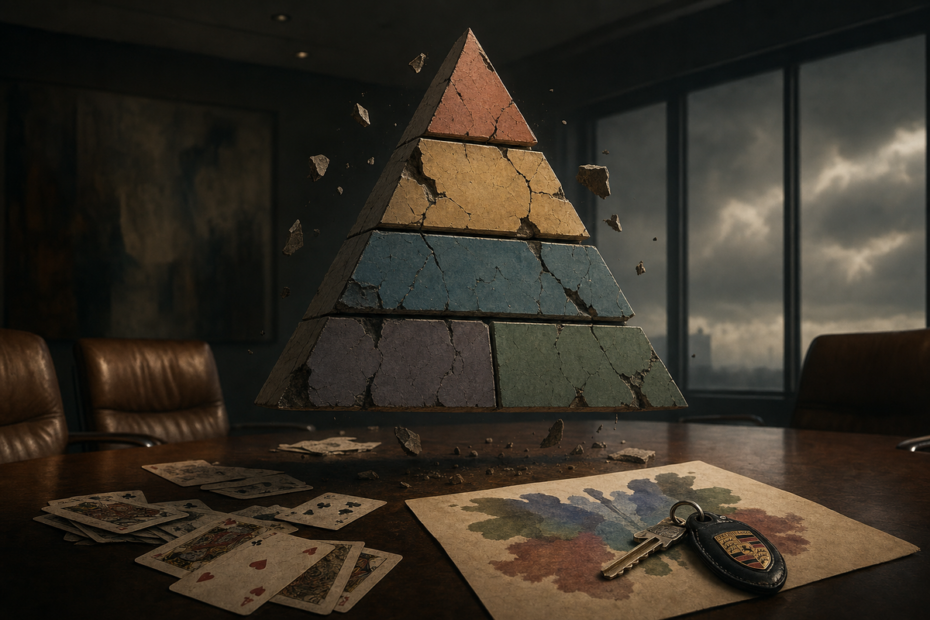
From there he takes a bat to several sacred cows. Maslow’s hierarchy? The needs are real, but the pyramid is empirically dead — and Maslow never even drew the triangle. Some management textbook did, and we’ve been citing it as gospel for fifty years. Myers-Briggs? Three-quarters of people get a different type when they retake it within five weeks. It’s a mood ring with a certificate.
The real villain is the Illusory Truth Effect — repetition masquerading as evidence — plus our evolved instinct to trust whoever sounds most sure. Curt’s recommended fix isn’t paralysis or pedantry. Just hold your confident claims more lightly, get curious when someone pushes back, and actually look up one thing this week that you’ve been citing for years. The gap between what you know and what’s true is where the interesting stuff lives.
Read the Full Article
Get the best of Sevenelles in your inbox. Free, no ads, one click to leave.
Subscribe