
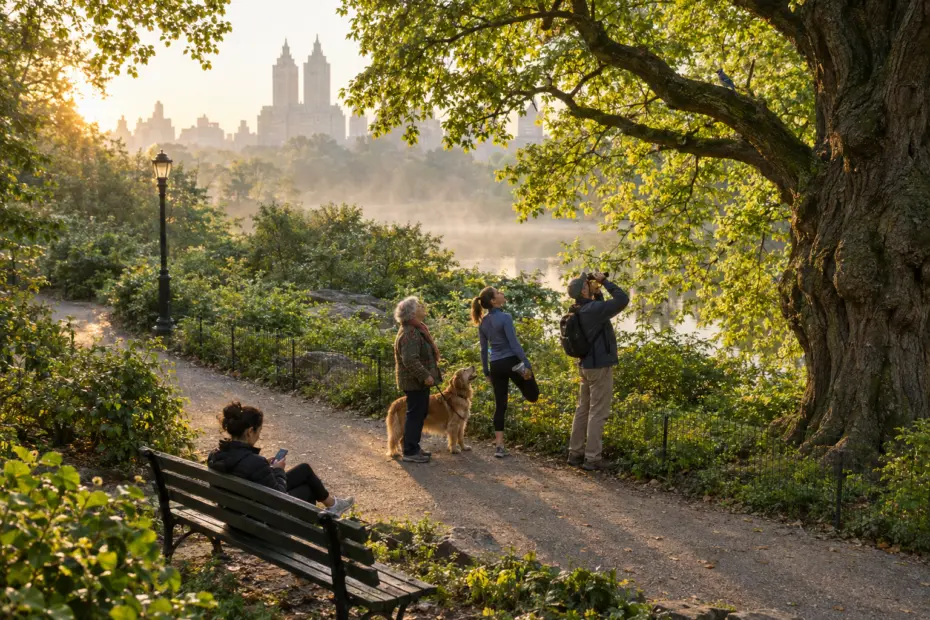
Smart Ass Take:
The headline finding here is that scientists gave lonely people in Barcelona a carefully designed year of peer support, trained facilitators, and curated group outings, and gave a control group a map. Both groups got less lonely. A map. We have spent two decades and several trillion dollars building apps engineered to connect us, and it turns out a piece of folded paper pointing toward some trees does roughly the same job (better, probably, since the paper isn’t selling your attention to a sports betting app). I find this both hopeful and mildly insulting, the way it’s insulting when a doctor tells you the cure for your back pain is to stand up occasionally. The fix for the modern condition is apparently the pre-modern condition: go outside, look at something bigger than your own skull, and accidentally say hello to the guy whose beagle keeps eating sticks. The catch, as the article notes with admirable restraint, is that a gorgeous sunset does nothing for you if you’re photographing it for people who aren’t there.
Article Excerpt:
“People who received peer support and went on regular nature activities felt much less lonely, even months after the study ended. But surprisingly, so did the control group who only received the nature-based activities.“
Article Summary:
Loneliness is rising worldwide, and we now spend about 90 percent of our day indoors, cut off from each other and from anything with leaves. Richard Sima’s Washington Post piece argues the two problems share a fix: go outside, ideally with other people. Loneliness is linked to depression, anxiety and dementia, so this is a bit more serious than cabin fever.
The theories for why nature helps are reasonable. It shifts the nervous system out of fight-or-flight, and it offers ‘soft fascination’ that lets the mind wander and stop chewing on itself. A 2015 study found 90-minute nature walks reduced rumination and quieted a brain region tied to depression, while the same walk through a city did nothing. Nature also reliably produces awe, which shifts attention away from ourselves and toward other people.
The centerpiece is Jill Litt’s randomized trial of 320 lonely adults in Barcelona. One group got weekly nature outings with peer support and facilitators. The control group got a map. Twelve months later, both groups’ loneliness had dropped by almost 17 percent, because, to the researchers’ surprise, people actually used the map. The loneliest got the most out of the group version. Similar programs in five other cities, from Helsinki to Melbourne, also reduced loneliness.
The advice is practical: put the phone away, notice the regulars on your route and talk to them, join a hiking or birding group or community garden, hang a bird feeder if you’re tired of humans, and walk, even if it’s a 15-minute walking meeting.
Read the Full Article
🌱 Try This
The research says the moments matter more than the minutes, and that the people already outside are your easiest way in. So this week, use your walk to make one small connection on purpose.
- Pick a route you can walk at the same time on at least three days this week, with your phone in your pocket the whole way.
- Pay attention to who else keeps showing up: the dog walker, the bench guy, the woman who power-walks like she’s late for a war.
- By the third walk, say one specific thing to one of them, like the dog’s name or the weird bird you both saw.
- If that goes fine, ask someone you already know to come along next week.
Get the best of Sevenelles in your inbox. Free, no ads, one click to leave.
Subscribe