
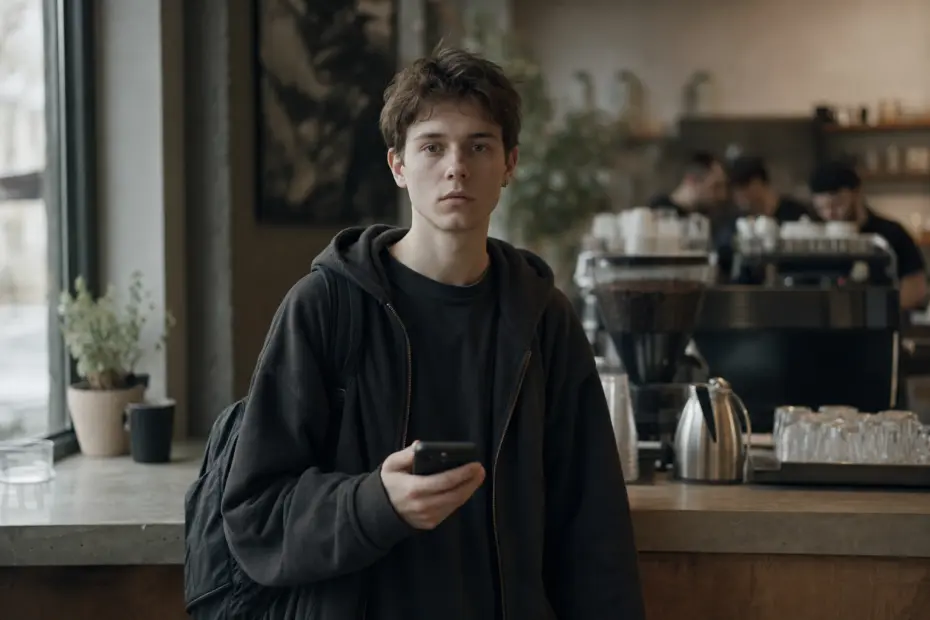
Smart Ass Take:
I have been on the receiving end of the Gen Z stare, and I have almost certainly delivered the Gen X equivalent (a slower, more disappointed version with worse posture). But there’s something to this. If you’ve spent your formative years texting, DMing, voice-memoing, and reacting with a thumbs-up emoji to your own mother, the muscle for saying an actual sentence to an actual human is going to atrophy. I don’t think this is a Gen Z problem so much as a Gen Everyone problem that shows up loudest in the youngest cohort because they had the least practice before the phones arrived. Talking out loud is a LEARN skill, a LOVE skill, and — when it goes badly, which it will — a LAUGH skill. Lose it and you get very efficient at ordering burritos through an app and very bad at the rest of being a person.
Article Excerpt:
The ‘Gen Z stare’ — that blank, unreadable look served up when a simple verbal exchange is expected — has become a generational Rorschach test.
Article Summary:
The Washington Post takes a swing at the so-called ‘Gen Z stare’ — the blank, faintly hostile look young people allegedly deliver when confronted with a spoken question from a boss, a barista customer, or anyone over 30. The piece argues it isn’t rudeness so much as a symptom: a generation that grew up mediating almost every interaction through a screen is now visibly out of reps on spontaneous, out-loud conversation.
Experts quoted in the article point to the collapse of low-stakes talking opportunities — cashiers replaced by kiosks, phone calls replaced by texts, small talk replaced by silence with earbuds in. The muscles for improvised speech, they say, need use. Without it, even simple exchanges start to feel like a pop quiz.
There’s the requisite hand-wringing about mental health, social anxiety, and pandemic-era isolation, plus the obligatory reminder that every older generation has always thought the younger one was doomed. Fair.
The article lands somewhere reasonable: the stare is real, it’s not malicious, and the fix isn’t scolding kids — it’s rebuilding the everyday situations where humans have to open their mouths and produce words at each other. Whether anyone will actually do that, or just write more articles about it, is left as an exercise for the reader.
Read the Full Article
Get the best of Sevenelles in your inbox. Free, no ads, one click to leave.
Subscribe