
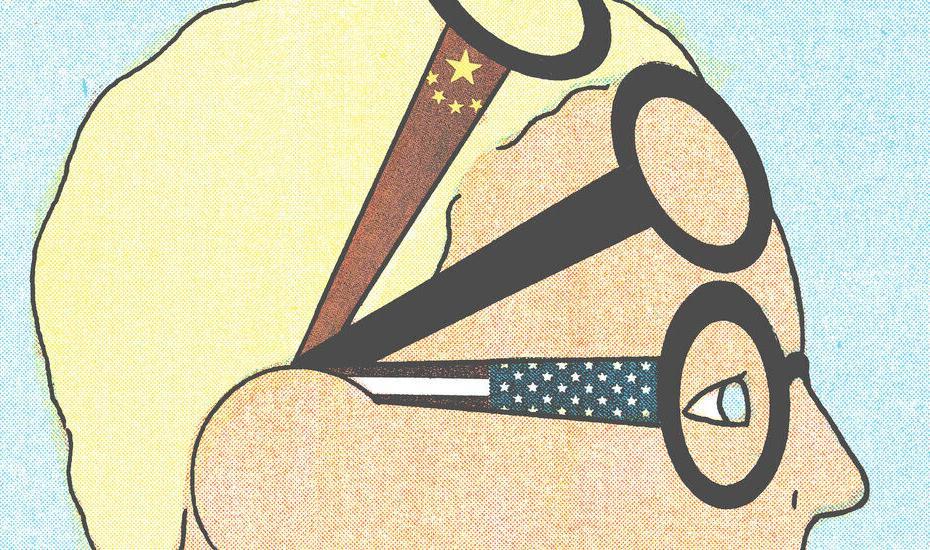
Having watched some (though not quite all) of “3 Body Problem,” Netflix’s hit adaptation of “The Three-Body Problem,” the first book in a science-fiction saga by the Chinese author Liu Cixin, I’m struck by the unusual geopolitical weight this particular piece of pop entertainment carries. At a time when Chinese-American relations are notable for a lack of sustained cultural exchange, here is a best-selling work written within our leading rival, carrying various clash-of-civilizational themes, translated into popular television for an American audience. There aren’t a lot of other cases where a major piece of pop culture is so clearly working along the fault lines that have led to great-power conflict and could one day lead to war.
But then I’m also struck, reading the commentary surrounding the show and the books, by how the different projects of translation — from Chinese-language phenomenon to English-language best seller, then from book to TV show — have created an instability of interpretation, a difficulty settling on a narrative about what Liu’s story really means. Even a three-interpretation problem, you might say (sorry!), with different gazes and different translations yielding very different readings and reactions. (Some spoilers follow.)
Get the best of Sevenelles in your inbox. Free, no ads, one click to leave.
Subscribe