
Smart Ass Take:
I have spent twenty years treating the Internet like electricity: rarely offline for short but annoying periods that remind you just how central it is to my existence. But what if it went down for days? Months? Forever? Turns out the Internet is more similar to plumbing than electricity, and some of the pipes run through some very treacherous places. And now just the infrastructure is at risk. Huge chunks of the Internet rest on computer code that some unpaid volunteer has been babysitting since the Bush administration, and the market’s response to a major outage was to buy more stock in the company that caused it. Everything we make fades: bodies, companies, cables, the server holding the only video of your dad laughing at his own terrible joke. So what will you do when the internet is gone? Probably what I’ll do. Stand in the kitchen holding a dead phone, realizing I never wrote any of it down.
Article Excerpt:
Brittleness is big business, a feature and not a bug of the cloud economy.
Article Summary:
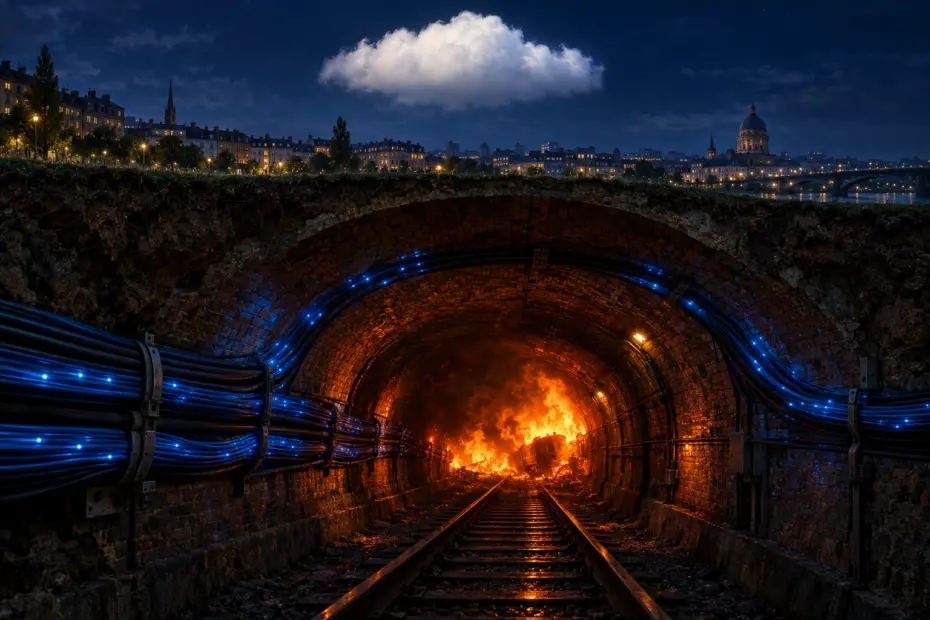
John West opens with a 2001 freight-train fire in Baltimore’s Howard Street Tunnel, which happened to be stuffed with fiber-optic cable. Web traffic slowed as far away as Atlanta and Los Angeles. WorldCom thought it had spread its traffic across different networks, but geography funneled them all through one burning hole. Redundancy, as one essay puts it, without diversity.
West’s point is that the internet is physical and mortal. It is cables, data centers, undersea lines that need constant repair, and a surprisingly small number of companies owning all of it. When Fastly went down for an hour in 2021 and took CNN, the Times and The Guardian with it, its stock went up. Investors saw a chokepoint and thought: monopoly. Fragility, it turns out, is profitable.
The cloud metaphor hides all this, along with the fact that the companies holding your family photos tend not to last. They get bought, split up, go bankrupt, or get flattened by geopolitics. AI, with its water-guzzling, power-hungry data centers, has made the plumbing visible again. It has also exposed how much critical software, like PHP (running roughly 70 percent of websites), depends on volunteers. Cue the famous comic of the whole Jenga tower resting on one block maintained by a random person in Nebraska.
West’s conclusion: the internet survives only through continuous human attention, from human institutions that fade just like human bodies. He ends with a metaphor about manure helping dogwoods bloom, which is either lovely or a very accurate description of the comments section.
Read the Full Article
🌱 Try This
The article’s point is that the cloud is just a few fragile companies and some cables, and none of them promised to keep your memories forever. So this week, pull one thing you’d genuinely grieve out of the cloud and into the physical world.
- Pick the 20 photos or the one document you would be sick about losing, not the 14,000 you merely have.
- Print them, or copy them to a drive you can hold in your hand.
- Write a name, a date, and one sentence on the back of each print or in a note beside the files.
- Put them somewhere a family member could find them if you couldn’t explain where they were.
Get the best of Sevenelles in your inbox. Free, no ads, one click to leave.
Subscribe